


943 results

As the Canadian Truth and Reconciliation Commission provides its final report this week, ICTJ presents a video in culmination of our work with youth in support of the TRC over the course of its mandate. "The Truth in the Classroom" demonstrates the commitment of children and youth across Canada to engage with issues related to Indian Residential Schools and to promote education about their legacy.

In this op/ed, the head of ICTJ's Kenya Program, Christopher Gitari, argues that President Kenyatta's recent apology to victims—though commendable—must be supported by solid reforms and initiatives for rebuilding the lives of those who have suffered the most.

Thembi Nkadimeng, the sister of disappeared anti-apartheid activist Nokuthula Simelane today filed an application before the Pretoria High Court compelling the National Director of Public Prosecutions and the Minister of Justice to refer the kidnapping, torture, disappearance and murder of Nokuthula Simelane to a formal inquest. This case is aimed at bringing closure to the 32 year old abduction, torture and enforced disappearance of Nokuthula Simelane.

ICTJ, in alliance with organizations Corporación Caribe Afirmativo, Colombia Diversa and Santa María Fundación organized meetings with activists and victims of the conflict to learn more about the needs of the LGBTI community, and to consider how transitional justice measures—especially non-judicial approaches—can contribute towards protecting their rights.

The wives of the missing and disappeared in Lebanon continue to suffer serious social, psychological, legal and financial effects on their lives, and the lives of their children, says a new report by ICTJ and the Institute for Women’s Studies in the Arab World at Lebanese American University.

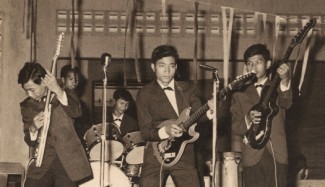
The new film "Don't Think I've Forgotten: Cambodia’s Lost Rock and Roll" explains the events of 1960s and 70s through the eyes of the musicians and artists who ushered in a new era of sound, only to be silenced too soon. As the world commemorates the 40th anniversary of the genocide in Cambodia, the new documentary presents the untold story of how their music managed to survive.

70-94% of the victims of enforced disappearances are men. But what happens to the women left behind? ICTJ's Amrita Kapur explains why women are uniquely impacted by the crime, and how transitional justice can help.

ICTJ condemns in the strongest terms the murder last night of Senior Principal State Attorney Joan Kagezi, in Kiwatule, east of Kampala. As the founding prosecutor of the International Crimes Division of the High Court of Uganda, Kagezi played an instrumental role in introducing best practices to advance the effective investigation and prosecution of international crimes in Uganda.

On the International Day for the Right to the Truth and 35 years after the assassination of Archbishop Oscar Romero, ICTJ Vice President Paul Seils explains why the pursuit of the truth is not a second-best option in the absence of other remedies: it is the most basic requirement of taking seriously the dignity of victims.

President Jacob Zuma risks irreparably damaging the credibility of core elements of South Africa's deal with the victims of apartheid with his current plan to pardon 149 serious offenders and to potentially consider another 926 applications which are before him. Such a move would mark a profound breach of trust with the victims and South African society at large.