524 results

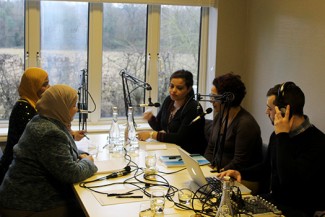
Even in the face of ongoing brutality, many of the nearly 12 million Syrians displaced by the conflict long for their return home – dependent, of course, on certain conditions being met. For our latest report, ICTJ interviewed dozens of Syrians refugees in Lebanon to discuss the impact of the conflict on their lives, their expectations for a potential return home, and their view of what coexistence in Syria might look like. We sat down with the report's authors, Rim El-Gantri and Karim El Mufti, to discuss their findings.
Discussions about a future return of refugees and coexistence among groups currently at war in Syria must begin now, even in the face of ongoing violence and displacement. This report, based on interviews with refugees, makes it clear that the restoration of dignity will be important ...

In 1986, Wachira Waheire was whisked off the street, taken to Kenya's most infamous torture chamber, and sentenced to four years in prison. Over the next 30 years, his quest for justice led him to meetings with his torturers to courtroom showdowns with the country's Attorney General. Discover his ongoing struggle for truth, acknowledgement, and reparations alongside all survivors of abuse in Kenya.

Ongoing economic and social inequality, a legacy of the dictatorship, affects Tunisians across generations, but has particularly pronounced impacts on young people. ICTJ worked with four young photographers to confront the consequences of marginalization and explore its impacts on Tunisian youth. Their four photo galleries comprise the exhibition "Marginalization in Tunisia: Images of an Invisible Repression.”

A new book by ICTJ titled Justice Mosaics: How Context Shapes Transitional Justice in Fractured Societies examines the challenges of responding to massive human rights violations in different and difficult circumstances in today's world.

This report presents the main findings of a multiyear research project conducted by the International Center for Transitional Justice on the challenges and opportunities of responding to serious and massive human rights violations in different contexts. The project commissioned 21 stu...

What hope is there for justice for victims of atrocities in profoundly fractured societies, where systems of government have broken down and social and political divisions run deep? What is the role of transitional justice in forging peace in countries like Colombia, after decades of ...

To mark 15 years of ICTJ, we asked staff past and present for memories that stand out to them - moments that throw the stakes of our work into sharp relief and resonate with them years later. Virginie Ladisch and Clara Ramirez-Barat recall how one Canadian student, in exploring the legacy of the country's Residential Schools, arrived at the concept of "never again."

In the Netherlands, a court sentenced an arms dealer to 19 years in prison for his role in war crimes in Liberia. What does his case tell us about pursuing justice for economic crimes in Liberia and beyond?

The impact of Tunisia's transitional justice process is rooted in its ability to give voice to diverse segments of the population, including historically marginalized communities. A workshop hosted by ICTJ brought generations of women together to explore truth-telling techniques and create space for all voices.