
ICTJ recently convened human rights defenders, journalists, and lawyers from Libya, Sudan, Syria, Tunisia, and Yemen for a workshop on digital, open-source investigations. Held on November 3-8 in Kampala, Uganda, the course trained participants on open-source tools with a view to strengthening their work investigating, documenting, and monitoring human rights violations. ICTJ closely collaborated with the Human Rights Center at the University of California–Berkeley (HRC), building on similar courses they conducted together for Yemeni and Libyan human rights defenders in 2023 and 2024.
This latest workshop largely focused on the cohort of participants from Sudan, where the ongoing war between the Sudanese Armed Forces and the Rapid Support Forces (RSF) militia has devastated the country and created the world’s worst humanitarian and displacement crisis. Famine conditions have been confirmed in two regions, and another 20 areas have been declared at risk of famine. Meanwhile, reports of genocide have emerged in the Darfur region for the second time in two decades. In this volatile context, digital, open-source investigative tools are critical to human rights defenders, journalists, and lawyers as they endeavor to record what is happening and preserve evidence of massacres, sexual violence, looting, and the razing of towns, particularly in areas where access is limited.
In the week prior to the course, the RSF began its deadly assault on the city of El Fasher in Darfur, where satellite imagery and videos posted on social media by victims and perpetrators supported reports of atrocities bring committed inside the city. The events weighed heavily on the minds of participants and gave a sense of urgency to the workshop. As an applied exercise, participants investigated cases from El Fasher, using the open-source tools on which they received training and the lessons they learned during the course.
“There are so many stories present on the ground in Sudan that really need help from us as investigators,” asserted Nadia Bela Al-Ahmed, a journalist from Darfur. “We must work on this aspect fundamentally, so that there can be future justice… and from that, there can be a victory for the victims, and we can work to be a voice for the marginalized, for those who have been silenced.”
“The collaboration between the HRC and the ICTJ draws on the expertise of both our organizations to strengthen the impact of frontline investigators in conflict-impacted communities,” explained HRC trainer, Maggie Andresen. “Graduates of our joint programming are better equipped to pursue accountability and other pathways to transitional justice using digital investigative methodologies, and share their knowledge with other journalists, lawyers, activists, and members of civil society to scale impact.”
As a part of this effort to scale impact and connect investigators in the region, Libyan, Tunisian, and Yemeni alumni from the 2023 and 2024 courses attended the workshop, serving as trainers and co-facilitators alongside HRC experts. These alumni shared their own experiences using open-source investigative tools, while also assisting the Sudanese participants with the exercise investigating cases from El Fasher. “I’m not just teaching, I’m also learning,” reflected Thurayya Dammaj, a journalist and activist from Yemen. “Even from the new participants who came from Sudan, I benefited from them greatly… I felt a responsibility toward them. I truly felt a responsibility that the information I have obtained or learned should be available to everyone.”
While digital, open-source investigative methodologies and tools can help advance justice and accountability for human rights abuses, the technology they require evolves quickly and can leave behind human rights defenders in conflict zones and those living under repression. “Accessing open-source digital tools and sharing them with others... these tools exist,” noted Radhia Charaabi, an investigative journalist and professor from Tunisia. “But we need to transfer them to the community of investigators, so they can train on how to use them and employ them in their investigations, and in the search for evidence about the allegations circulating in their society, so they can perhaps show this truth to the world,” she continued.
“Digital, open-source investigative tools greatly expand the possibilities of what information and data related to human rights violations can be documented,” explained ICTJ expert, Emma Merritt-Cuneo. “But decisions about what is documented, before a transition even happens, not only can influence who is criminally prosecuted, but can also influence what and whose truth is established, who gets access to reparations programs, what reparative benefits are provided, and what institutions get reformed.”
When conflict and abuses are ongoing, it may be unclear how some of these data will be useful in future justice efforts. Nevertheless, by collecting expansive data about the crimes that occurred, human rights defenders can increase options for justice, beyond criminal accountability, as well as help shape what transitional justice looks like in their country and ensure those processes are victim centered and relevant.
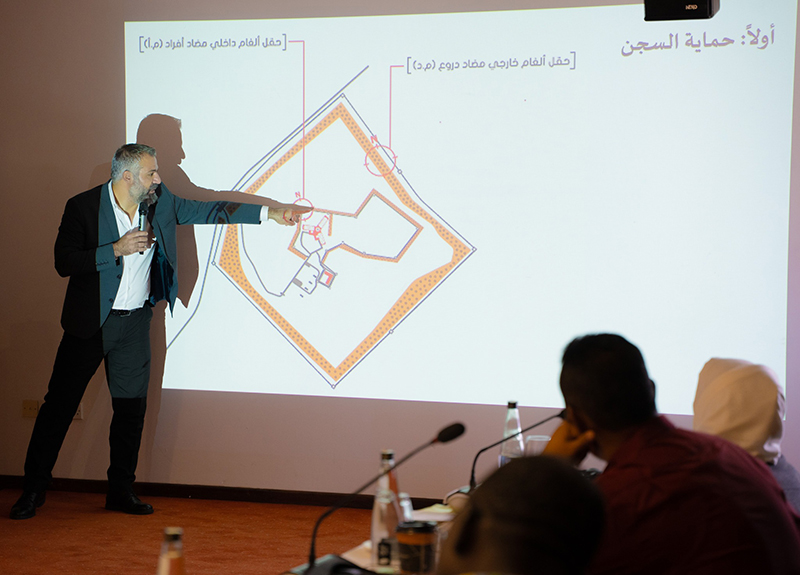
“Open-source investigation skills can help in the design of transitional justice mechanisms, not just courts, not just truth commissions, but even memorialization, or even in fields like environmental protection, and securing sources of food and livelihood now or in the future,” said ICTJ senior expert, Ruben Carranza. “It’s important to put this together and help participants prepare for a future in which peace and accountability can happen.”
The open exchange of knowledge and strategies offered the participating human rights defenders from different countries and backgrounds a sense of solidarity and connection—a brief respite from the isolation they often feel in this line of work. The diverse experiences they shared stimulated conversations about how they can make the most of the digital tools and investigative skills they learned in the course to advance various justice objectives in their respective countries.
The Sudanese participants also reflected on the ongoing war, its violent legacy, and a future where peace and justice can take root. “This war, which began on April 15, [2023,] may leave in its wake a very large number of violations. This places a very large burden on defenders,” stressed Sudanese lawyer, Mozamel Belgali Mohammed. “Therefore, this course came at an excellent time… In the period ahead, God willing, if peace comes, if a democratic transition comes, we can, through the information and skills we've acquired… truly document and monitor these violations... This is so they are preserved and archived in our records until peace comes, and we can hope to use them to advance transitional justice.”
__________
PHOTO: Several participants undertake an exercise during the workshop in Kampala. (Maggie Andresen/HRC)